As of 2025, South Sudan remains a deeply divided country struggling to overcome its horrific past and current devastating plight. There is insecurity across the country, and a sustainable national reconciliation seems unlikely to happen anytime soon. The country has been plagued by tribalism, corruption, weak governance, and dysfunctional institutions, which have continued to hinder its growth since independence.
The leaders are busy promoting wars and escalating deep division in society instead of stabilizing the country and growing the economy. The dreams of its people, who fought so hard for independence, are not wasted. The country must address its differences, promote inclusivity, and ensure that the government remains accountable to its people.
The Oil Dependency and the Economic Collapse
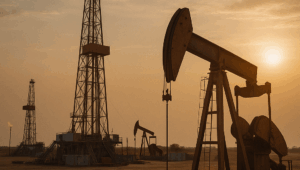
The civil conflict in South Sudan had many bad effects, but one of the worst was that the economy fell apart. Since independence, the country has relied heavily on oil revenue. After the war broke out in 2013, oil production fell sharply, and many of the country’s oil fields were either damaged or closed because of the fighting. In Unity State and Upper Nile, rich in oil, fighting broke out, and the infrastructure that was supposed to help with oil extraction was destroyed or made hazardous.
The inflation rate shot up, and the value of the currency fell quickly, making it impossible for many people to buy basic items. Food, fuel, and medical prices went through the roof, making the already bad humanitarian situation even worse.
The conflict made the economy, which was already weak, even weaker. Many businesses went out of business because they were afraid, and foreign investment in South Sudan dried up as international enterprises left the country. The fact that oil made up more than 90% of the government’s income made South Sudan sensitive to changes in global oil prices.
Corruption Leads to the Collapse of Government
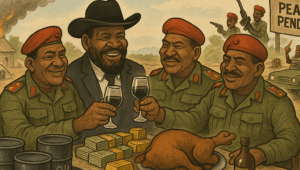
Corruption was a big part of why South Sudan fell apart during the brief peaceful time after independence. Politicians and military officials often mismanaged resources and stole money from the state treasury. Corruption was a big problem in the administration, the military, the security services, and even humanitarian work in the country. Elites often stole international aid and money that was meant to help with the rehabilitation process, making the misery of the people much worse.
A few wealthy elites had a lot of power and resources, had always wanted the conflict to continue indefinitely so help they could benefit even more. The elite secretly arm militias and communities to destabilize each other. This made the situation even more unstable and promoted endless violence.
The leaders of South Sudan did not put in place the anti-corruption measures needed to create a state that is accountable and works well for everyone. The government couldn’t successfully manage the country’s resources or deliver basic services to its residents because it couldn’t deal with corruption from the top down.
Identity Politics and Ethnic Polarization
The civil war in South Sudan brought to light the country’s significant ethnic divisions, which had always been there but were made clear by the fighting. The battle was defined by the fight between the Dinka and the Nuer. Ethnic division, which government leaders often made worse by inciting to gain more power and allies, led to horrible brutality and mass crimes in many parts of the country.
Leaders use ethnic identities to make the fighting seem like it was between the Dinka and the Nuer. At first, the battle was only a political fight between President Salva Kiir and Vice President Riek Machar. But it swiftly turned into a sectarian, violent. Militias and allies went after people based on their ethnicity, making civilians the main victims. Dinka soldiers killed a lot of Nuer civilians, especially in Juba, and Nuer fighters also killed Dinka civilians elsewhere in the country. Using ethnic designations to excuse violence started a cycle of retribution and retaliation that made the divisions in the society irreconcilable.
As ethnic identities became more militarized, tribal ties were typically seen as political links. This made it hard for the country to tell the difference between ethnic grievances and political goals since it blurred the lines between the political class and their supporters. The fight became more than just a fight for power; it became a fight for survival along ethnic lines.
This divisiveness has a huge effect on South Sudan’s chances of becoming a united country. Politics based on ethnicity has grown deeply rooted, and one of the biggest problems the country will face in the future will be recreating a national identity that goes beyond tribal affiliations.
Long-term Effects of a Humanitarian Crisis
The civil war in South Sudan caused one of the worst humanitarian catastrophes in the world. The UN and many other groups have called the situation disastrous, saying that millions of people are in severe need of food, water, shelter, and medical treatment. As of 2025, South Sudan is still in a terrible humanitarian crisis, with more than 7 million people, about two-thirds of the population, needing help inside or outside of the country.
Famine has been a problem that keeps coming again. Whole villages have been cut off from enough food because of fighting and the interruption of farming. Millions of people have had to leave their homes because of the war, both inside and outside the country. Over 3 million South Sudanese have fled to other countries, mostly Uganda, Ethiopia, and Sudan. More than 4 million people are still displaced within South Sudan alone.
Access to basic health care has also gotten worse because many medical institutions were destroyed or plundered during the war. Diseases like cholera, malaria, and tuberculosis spread quickly in crowded camps and combat zones, which have had terrible implications on public health in the long term. The health system was already fragile before the war, and the current conflict has made it even weaker.
The war has caused psychosocial trauma that has affected generations of South Sudanese, especially children who have seen or been through violence, displacement, and loss. The psychological ramifications of this kind of tragedy will last for a long time and will affect the population for years, making it increasingly harder to create peace and bring people back together.
Problems and efforts on a global scale
During the war, the UN, the African Union, and Western nations all tried to help South Sudan recover and bring about peace. People saw the signing of the 2013 peace deal and the 2015 ARCSS as promising steps forward. But progress has been slowed down by the fact that international actors don’t have a clear and united plan. Peace discussions were held, but they often fell through because of deep-seated interests among South Sudan’s political elite. The lack of accountability for war crimes by leaders further hurt the peace process.
Also, the way things are in the region has made it harder to work for peace to be realized in South Sudan. Kenya, Sudan, and Uganda, which are next to South Sudan, have their own political and strategic interests there. Outside groups often put their national interests ahead of South Sudan’s long-term stability.
The Failure of Global Peacekeeping and Support Systems
Peacekeeping missions and humanitarian aid have been two of the most important parts of the international response to the violence in South Sudan. The UN Mission in South Sudan (UNMISS) was sent to the country in 2011 to help keep the peace and keep people safe. But as the fighting got worse, the mission had a hard time doing what it was supposed to do.
UNMISS was the biggest peacekeeping operation in Africa, but many often said it didn’t do enough to stop violence and keep civilians safe. The peacekeepers were often put in defensive positions, and in other situations, they didn’t do anything to stop the carnage. The peacekeepers’ inability to stop horrible acts like the Juba massacre, which murdered hundreds of civilians, drew a lot of criticism and made people doubt how well the UN works in conflict zones.
One of the biggest problems was that UN member states didn’t give peacekeeping operations strong mandates and put limits on what they might do. Many countries didn’t want to spend the money needed to keep the peace, and often the UN’s peacekeeping forces were too spread out across too many war zones. Because there wasn’t enough political will, peacekeepers couldn’t protect vulnerable groups or even respond to attacks on humanitarian workers.
The problem was made worse by the way things were going in the region, where countries like Uganda and Sudan routinely put their own needs ahead of those of the peacekeeping effort. In some circumstances, peacekeepers were stuck between two groups that were fighting each other and couldn’t keep order or help with peace discussions in a meaningful way.
The peacekeeping mission had its problems, but so did foreign humanitarian groups. Ongoing violence, limits on aid access, and attacks on humanitarian convoys led several international NGOs to stop working or cut back on their activities. Even while many tried to get food, medical supplies, and shelter to people affected by the fighting, it got harder and harder to get relief to them. Many South Sudanese civilians were malnourished, sick, and without essential amenities.
IGAD Members’ Interest in South Sudan’s Politics
The neighboring countries, international powers, and regional organizations had a big impact on South Sudan’s politics. During the war and in efforts to build peace, Uganda, Sudan, Kenya, and Ethiopia were all very interested in the country’s politics. Even though they acted as mediators, their interests often clashed with the larger peace process.
For instance, Uganda’s involvement was very important because the country sent troops to help Salva Kiir’s government. The Ugandan military was in South Sudan to battle against rebel groups and protect the capital city of Juba. But some people thought that Uganda’s support for Kiir’s government was also based on strategic reasons, such as keeping oil pipelines safe and gaining more power in the region. Uganda’s involvement (and to a lesser extent Sudan’s) made the peace talks more difficult and made people feel that outsiders were getting involved, which made the conflict even more divided and hard to solve.
Sudan’s position in South Sudan’s politics was still important, especially when it came to the oil industry. Sudan had pipelines and other infrastructure that linked South Sudan’s oil reserves to markets where they could be sold. There have been a lot of problems between the two countries regarding sharing oil money and the border. People also disagreed on Sudan’s historical role as a mediator in South Sudan’s peace process because it had its own problems and wanted to keep the peace with its southern neighbor.
The African Union (AU) and the Intergovernmental Authority on Development (IGAD) were both very important in the peace process. IGAD set up several of the peace negotiations. But diplomatic efforts from outside the country typically have a hard time getting beyond the deep political and ethnic divisions in South Sudan. Sometimes, peace accords were reached, but they were broken within months because neither side wanted to make changes or share power.
The Difficulty of Building a Nation.
There have been peace deals and ceasefires, but the road to rebuilding after the war has been sluggish, unclear, and full of problems. Repairing South Sudan is an enormous and complicated task that involves more than just repairing buildings or infrastructure, but a mentality that will foster nation-building. It also involves rebuilding social trust, forgiveness, and reconciliation.
The issue of trust is one of the biggest problems that make it hard to reconstruct institutions. People in South Sudan don’t trust their government very much, and their ethnic identity often comes before their national identity. This makes it hard to come up with a single national vision for the country. Many people in South Sudan know that their government is corrupt and just cares about itself, so there isn’t much reason for them to help with reconstruction.
Also, the civil war rendered society more militarized, which has made it very hard to demobilize and reintegrate soldiers into civilian life. In other areas, armed organizations are still in charge, and militia groups still have a lot of sway in local politics. In essence, South Sudan is an ethnocentric and militarized nation that will take a real leader to reconstruct.
Since becoming independent in 2011, South Sudan has had a hard time establishing itself because of long-standing ethnic tensions, a wicked government, massive corruption, and wars between warlords. The 2013 civil conflict was due to power disputes between governmental leaders and ethnic tensions, especially the SPLM (Sudan People Liberation Movement) warlords. Institutions are still weak, and public services are still not fully established. The institutionalized corruption has taken away resources, and oil revenue has made the few rich richer and the entire country poorer. The Constant violence, insecurity, displacement, and humanitarian crises have made South Sudan one of the most unstable in the world.