Who owns South Sudan?
“The elites loot while the country burns.”
When South Sudan attained independence in 2011, a wave of joy swept through the country. Citizens wept with pleasure, danced in the streets, and dared to dream of a nation free of Sudan’s decades-long conflict. However, a mere 3 years later, those aspirations have crumbled. What was once the world’s brightest hope has become one of its darkest tragedies, not because of natural calamities or foreign invaders, but because of a parasitic upper class that has stolen the country without repercussions.
This tale is not just a narrative about corruption. It is a story of state capture, in which individuals entrusted with leading have created personal empires on the rubble of suffering people. South Sudan is not owned by its people. Generals, politicians, and foreign profiteers hold it, while the vast majority live in displacement camps, poverty, or quiet.
A Nation Born with Promise—and Plunder.
“This is not just corruption; it is state capture.”
At first South Sudan seemed like the beginning of a better future. However, just over a decade later, its tale remains one of elite theft, militarized control, and broad despair. With tremendous oil resources at their disposal, the ruling class transformed a promising nation into a personal venture.
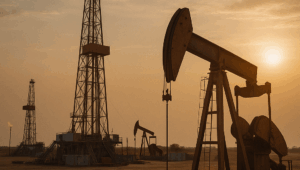
South Sudan’s emergence was accompanied by an abundance of natural resources, particularly oil. With petroleum exports accounting for more than 90% of government revenue, there was an opportunity to use this money to build schools, hospitals, and roads and create jobs. But the transition never occurred.
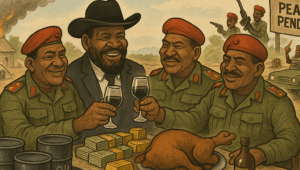
Instead, a small elite, typically men dressed in military fatigues or expensive clothes, distributed the oil income among themselves. Ministries were converted into personal banking accounts. Military ranks were auctioned. Public procurement became a cover for embezzlement. The state was hollowed out, operating not as a provider of public goods but as a patronage engine geared to enrich a few while rewarding loyalty with goodies.
The 2012 Auditor General’s report found that more than $4 billion in public cash had gone missing since independence. Then-President Salva Kiir wrote an open letter asking the culprits, who were primarily from his inner circle, to return the money. But no one did. No prosecution took place. South Sudan was no longer a country. It has become a business.
War as a Tool for Wealth.
In many countries, conflict damages the economy. In South Sudan, violence keeps the economy going—at least for the upper class.
Civil war broke out in 2013 because of political competition between President Kiir and former Vice President Riek Machar, and it was more than merely ideology or ethnicity. It was about controlling state resources. The military and political elites split into armed factions, each aided by a complicated web of foreign allies, smugglers, and oil transactions. The conflict caused turmoil, and in chaos, responsibility fails. Budgets grew without monitoring. Security spending skyrocketed. Defense officials requested and received blank checks, often in cash. “Ghost soldiers” filled payrolls. Humanitarian aid was diverted. As violence displaced millions, aristocratic families transferred their children overseas, purchased real estate in Nairobi or Kampala, and increased their wealth. The issue arises: who profits from South Sudan’s cycle of conflict and peace? The truth is unsettling: those negotiating peace are frequently the same ones who funded and fueled the conflict.
Peace Treaties Favor the Powerful
“Rebels are not disarmed; they are promoted.”
South Sudan’s peace agreements have strengthened rather than reduced elite authority. Each settlement resulted in more government positions, integrating warlords into a bloated state rather than holding them accountable. The 2018 Revitalized Agreement added five vice presidents and dozens of ministries, rewarding strife over competence. South Sudan’s political system is geared to absorb, not punish, misbehavior. Since 2013, each peace accord has centered on power-sharing rather than justice or institutional change. Rebel leaders are rewarded with government positions. Militias are absorbed into the army. War criminals become MPs. The very people who ruined the country now have greater powers to dominate.
The Revitalized Agreement on the Resolution of Conflict in South Sudan (R-ARCSS), signed in 2018, established five vice presidents, dozens of ministries, and a bloated government—not for the sake of governing, but to buy elite allegiance. What was the result? The elite class is more unified in stealing than in leadership. Civil society activists, journalists, and reformers have few opportunities in this system. Those who speak out risk harassment, exile, or worse. The looting continues, albeit more silently, under the guise of calm.
The Military’s Control Over Power and Profit is significant.
The generals are more than just warriors; they are merchants in uniform.
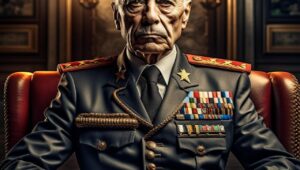
Leaders now use the army, once a liberating force, to generate profits. From mining to logistics, checkpoints to contracts, military elites profit from systemic breakdowns. Rank-and-file soldiers are unpaid, while top leaders build mansions abroad. In South Sudan, the military is more than just a defense force; it is also an economic actor. Top generals own private businesses. Some control checkpoints, mines, and terrain. Others operate logistics companies that earn inflated government contracts. Many people own homes and enterprises in neighboring countries. Their fortune is based on conflict, displacement, and state dysfunction.
Military advancements are based on tribal relationships and loyalty rather than merit. Soldiers often endure months without receiving pay, while their superiors enjoy luxurious lifestyles. The end effect is a demoralized military prone to desertion and violence.
The Sudan People’s Liberation Army (SPLA), which was later renamed the South Sudan People’s Defence Forces (SSPDF), has been significantly involved in the economy, blurring the distinction between state and corporate interests. As long as generals can profit from instability, peace will be elusive.
Foreign enablers and silent partners play a crucial role.
South Sudan’s looting class involves international oil companies, banks, and regional allies. Despite embargoes, weaponry continues to flow. Aid keeps arriving despite corruption.
South Sudan’s elites can hide their wealth behind global finance and hush networks.
South Sudan’s elites don’t loot alone. Foreign firms, banks, and governments all play a role, sometimes actively, sometimes silently. Oil companies operate with little openness. Regional banks help launder stolen funds. Despite constant evidence of abuse, international aid persists.
The United Nations has verified arms shipments that violate embargoes, with weapons reaching government and rebel groups. Meanwhile, foreign contractors obtain lucrative contracts to reconstruct what warlords have wrecked, frequently using monies from international donors.
This complex web of collusion extends to global financial centers. South Sudanese politicians have residences in Australia, bank accounts in Dubai, and retail properties in East Africa. The money flows freely. The people don’t.
The Dispossessed Majority.
Who owns South Sudan? The people do not own South Sudan! While the few elites profit, millions suffer.
- About 9 million South Sudanese, representing nearly 75% of the population, require humanitarian aid.
- Domestic displacement affects approximately 2 million people, while neighboring countries host an additional 2.2 million refugees.
- Over 70% of the population lacks literacy skills.
- The healthcare and education systems are on life support.
- Paved roads are scarce outside of Juba, indicating a lack of infrastructure.
Nonetheless, these data scarcely represent the emotional toll. The disillusionment. People have stolen away their futures. Generations are growing up knowing only violence and want while their leaders live in untouchable opulence. The people survive. The elite prosper.
The issue stalks the country: who owns South Sudan?
It’s not the farmers in Torit. It’s not the teachers in Wau. It is not the displaced families in Malakal or the widows of Bentiu. The president’s family and his tribal kinship own the nation, while the many suffer.
What Must Change in South Sudan?
Here are the important starting points:
The political culture must shift from power hoarding to public service. Leadership is often viewed as a personal reward rather than a public responsibility. The concentration of power in the hands of a few elites who view the country as their personal property must cease.
1. End Ethnic Politics: Ethnic allegiance takes precedence above national unity. Political identity must be defined by policy, vision, and skill, not tribal affiliation.
2. Corruption Must End—Not Be Managed: Oil Money Must Benefit the People: Every year, billions of dollars in oil earnings disappear. Where are the schools, hospitals, and streets? There must be a national audit, and looters must face prosecution. Ghost soldiers and fake contracts must be erased fraud thrives in the overburdened security sector. Clean payrolls and strong procurement oversight are not negotiable.
3. Militarism Must Give Way to Civilian Rule:
A state run by guns is a failed state. Armed organizations have established rival governments. A professional, cohesive army under civilian command is required. Disarmament and Reintegration must emphasize DDR (Disarmament, Demobilization, and Reintegration) or risk creating a generation that is born to war. However, we must first build trust through a truth and reconciliation initiative.
4. Justice for war crimes must replace impunity, as truth and reconciliation are futile without it. Those who ordered ethnic-based mass killings must be held accountable, like what happened in 2013 in Juba and other areas across the country. A functioning judiciary must be in place to enforce the rulings. Justice delayed is justice denied. Courts must be independent, accessible, and adequately resourced.
5. Basic services must be delivered: health, education, and clean water are rights, not privileges; no child should die because a hospital runs out of medicine, or a mother because a midwife is underpaid. Investing in human capital is a must. A nation that overlooks its youth and women is choosing to decline. We must prioritize skills training, education, and health care systems that help the country to provide adequate services to its population.
6. Building a National Identity: South Sudan’s ideal relied on unity among its diverse tribes. We must restore that dream through open dialogue, civic education, and national healing, reconciliation, and accountability. We must support culture, language, and storytelling. The warlords have distorted our past, silencing our trauma. Telling our true tales is the beginning of healing.
- Reform the security sector by depoliticizing and professionalizing the armed forces. No nation can prosper if its army functions as a private enterprise or militia.
- Civic Space Must Be Protected. We must have freedom of expression, press, and protest. A democracy without dissent is a dictatorship in disguise. Journalists, activists, and people must have the freedom to talk, question, and organize.
- Identify and sanction looters: International actors must go beyond statements. Targeted sanctions, asset freezes, and travel restrictions on prominent officials and their networks can alter the cost-benefit analysis of corruption.
- 10. Audit the oil sector: Lack of transparency in oil earnings leads to further plundering. Publicizing a credible, independent audit is crucial.
- Support grassroots leadership, including civil society, women’s groups, youth leaders, and journalists, by providing protection and platforms. Real change comes from below, not simply from the presidential palaces.
The nation finds itself at a critical juncture.
“The world cannot fix South Sudan—but it must stop enabling its destruction.”
The nation stands at a pivotal point. Either it maintains its status as an exclusive club for warlords and oil billionaires, or it evolves into a nation governed by its citizens.
Until then, South Sudan is not free. South Sudan remains under ownership. But if we don’t break the bonds of elite capture, the cycle of war, peace, and pillage will persist. The people of South Sudan have had enough. They deserve leaders who will serve, not exploit. And South Sudanese citizens—in the diaspora, camps, cities, and villages—must continue to speak up, demand justice, and recover what is rightfully theirs, South Sudan