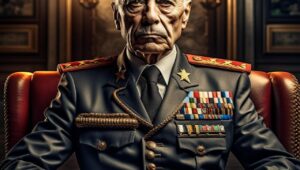
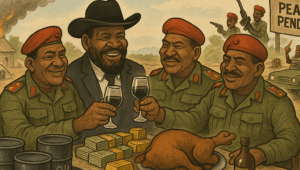
Following independence in 2011, military figures dominated the political scene. Former rebel leaders rose to the positions of general and governor. The SPLA rebranded itself as the national army with no civilian oversight. Political loyalty took precedence over merit. The state lacked a clear line between government and military, allowing armed forces to function as personal tools.
The world’s newest country emerged after a deadly and protracted liberation conflict with Sudan. Nonetheless, it is a painful fact. Rather than transitioning to peaceful civilian rule, South Sudan has transformed into a profoundly militarized state, where firearms often overpower laws, and military power is inextricably linked to political authority.
Militarization is more than just armed soldiers patrolling the streets; it is a systemic state in which the military defines governance, establishes justice, commands resources, and creates the nation’s identity. It affects all aspects of life and is the cause of the nation’s ongoing violence, poverty, and instability.
Military leaders dominated the political scene. Former rebel leaders rose to the positions of general and governor. The state lacked a clear line between government and military, allowing armed forces to function as personal tools. Fighters are frequently portrayed as liberators in popular media. Songs, legends, and statues celebrate martyrs, but they rarely recognize peacemakers and educators. This cultural reinforcement strengthens militarization by portraying war as heroic and peace as weak. Young people are raised to believe that military power is more important than civic responsibility.
The Comprehensive Peace Agreement of 2005 did not end militarization. Demobilization programs lacked proper planning and funding. Many ex-combatants were never reintegrated into civil society. Instead, they reverted to armed groups, militia factions, or private security forces. Political elites maintained militias as tools of leverage, using violence to win elections, stifle opponents, or control resources.
The Origin of Militarization
During Sudan’s first and second civil conflicts (1955-1972 and 1983-2005), militarization shifted to orchestrated insurgencies. The Sudan People’s Liberation Army (SPLA) institutionalized violence as a political tool. Villages were turned into barracks, and children were transformed into soldiers. Armed conflict eclipsed diplomacy, imprinting a military mentality on the national consciousness. When the country gained independence, the SPLA was simply renamed the South Sudan People’s Defense Forces (SSPDF). However, the dismantling of military institutions never occurred. Former rebels became politicians, generals became governors, and military officials continued to hold the country’s most prominent ministries. In consequence, the pistol was the primary source of legitimacy.
Rule by Rifle: How the Military Dominates Politics
Politics in South Sudan have remained militaristic ever since the country gained its independence. Most prominent government officials have military credentials, and many political and economic decisions are made via military channels. Instead of elections, merit, or public service, armed allegiance is frequently used to support or select political appointments and power-sharing. Their military background gives them unquestioned power, deterring resistance and marginalizing technocrats. Power struggles are rarely resolved through conversation or judicial proceedings. Instead, they’ve made their home on the battlefield. These developments resulted in recurring cycles of warfare, the most notable of which was the civil war that erupted in 2013 between forces loyal to President Salva Kiir and his former Vice President Riek Machar. The battle swiftly turned into a larger ethnic and military conflict that devastated the country.
Parliament is not independent. The judiciary bows to executive pressure. Electoral bodies are motivated by fear or coercion. The military, on the other hand, serves as the genuine core of authority. Military offices, rather than civilian forums, dictate national policy, resource distribution, and internal security decisions. South Sudan’s authorities maintain power by providing guns, ranks, and benefits to loyal militias. Military promotions often serve political purposes. nor peacekeeping operations. In this situation, loyalty to the gun takes precedence over commitment to the Constitution.
More often, threats, incarceration, and exile are all possible outcomes for opposition voices. The government closely monitors civil society. Journalists are the target. Political disagreements rarely stay in parliament; instead, they evolve into armed clashes. Military exercises take the place of dialogue. The rifle determines who has the right to speak.
A Bloated Military.
South Sudan has one of sub-Saharan Africa’s largest standing militaries in terms of population, even when no foreign power poses a threat to the country. The army is fractured, with many factions integrated into the national military through peace treaties. Many forces remain loyal to individual commanders rather than the national chain of command. This bloated structure lacks discipline, strategic purpose, and coherence.
The military consumes a sizable portion of the national budget—often more than 40%—while schools, hospitals, and infrastructure are severely underfunded. This is not a military meant to defend a country. It is a system designed to benefit elites and maintain power through force. The military payroll is rife with phantom soldiers, inflated ranks, and fictional formations. Regular delays in salaries lead to mutinies. Meanwhile, sectors such as education, healthcare, and infrastructure receive little investment. This misallocation stifles national progress and increases poverty.
Former rebels are routinely integrated into the army without undergoing thorough vetting, training, or disarmament. This policy increases soldier numbers while causing internal divisions. These ex-combatants frequently stay faithful to their former leaders. As a result, the army is more like a coalition of competing militias than a coherent defense force.
The army’s influence extends into civilian domains like state-owned corporations, municipal governments, and resource management. Military officers govern enterprises, manage contracts, and dominate political appointments. This creates a conflict of interest in which security personnel profit from instability rather than peace.
Civilian Victims of Militarization.
The paradox of militarization in South Sudan is that, rather than providing security, it has rendered people more vulnerable. Underpaid or unpaid soldiers regularly loot villages, steal livestock, blackmail locals, and engage in violent crimes. These offenses are rarely penalized.
When political conflicts become heated, they frequently spark communal violence. Specific ethnic groups frequently have connections with government forces. Armed youth organizations, supported by political elites, attack opposing communities. They torch entire villages, steal cattle, and massacre residents—not for military purposes, but to settle political or ethnic scores.
Military operations and retaliatory attacks devastate houses, crops, and markets. Civilians are often forced into overcrowded camps where insecurity persists, civilians leave with nothing. Armed militia or gangs frequently raid these shelters, and safety is sketchy or nonexistent. Civilians in rural areas are caught in the crossfire between government forces, rebel organizations, and communal militias. Security forces harass young people in metropolitan areas. In both cases, trust in the government dwindles. People regard the government as a predator rather than a defender.
The militarization of local administration has also forced chiefs, commissioners, and other civil authorities to cooperate with military power or risk being removed or targeted.
Soldiers and militias are rarely held accountable for their actions. Courts are weak or nonexistent. Victims are rarely given recompense or justice. Reporting crimes often leads to retaliation. This lack of law exacerbates violence and creates mistrust between communities and the state. Civilians are the genuine victims of a system that prioritizes guns over regulations. Until we disarm political conflict and restore justice, peace will remain elusive in South Sudan.
Ethnic Fragmentation and Militarization.
In South Sudan, ethnicity is more than just a social identity; it also serves as a political instrument. Armed groups organize along ethnic lines, and commanders use ethnic loyalty to recruit fighters, maintain control, and justify bloodshed. As a result, we have a militaristic society in which identification defines allegiance, resource access, and personal safety.
South Sudan’s militarization is intricately linked to ethnic politics. The government frequently recruits soldiers and allied militias along ethnic lines. This practice has exacerbated ethnic tensions, resulted in targeted bloodshed, and weakened national identity. Such an approach creates a perilous situation in which political disagreements can rapidly escalate into military confrontations, and peace treaties are frequently elite negotiations between armed groups rather than fundamental transformations.
Efforts to establish a national army have failed owing to ethnic division. Parallel chains of command result in internal conflict and a lack of coherence. Soldiers frequently obey ethnic commanders rather than national authority. Political elites use ethnic differences to their advantage. Instead of establishing inclusive governance, they rally their ethnic bases, use armaments to reward loyalty, and frame political competitions as a battle for ethnic survival. This method destroys national unity and converts every political disagreement into a potential civil war.
As ethnic identity becomes militarized, civilians no longer regard the state as neutral. Communities arm themselves for safety, sparking local arms races. Revenge killings and cattle robberies turn into full-fledged ethnic confrontations, frequently with political or military support. This cycle of violence rips apart the country’s social fabric.
Militarized ethnicity has transformed South Sudan into a patchwork of armed enclaves, each with its own identity. Real peace will only occur when national identification trumps tribal loyalties and guns serve the nation rather than the clan.
A Militarized Economy
The military in South Sudan is more than just a security agency; it is also an economic power. Weapons circulate in informal markets, where they are traded for livestock, products, and loyalty. Armed organizations control roadways, levy taxes, and extort traders. Guns are more valuable than talents, and force takes precedence over legality in regulating markets.
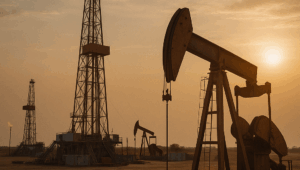
Militarization hurts the South Sudanese economy because defense contracts and arms purchases are rife with corruption. Senior military officers possess substantial commercial interests in the oil, construction, and trade sectors. Arms are traded, and state funding is diverted to military-connected networks.
High-level officials oversee critical economic sectors, control oil income, and obtain no-bid contracts. The military hierarchy morphs into a network of rent-seeking elites. Procurement transactions are opaque, and ghost soldiers bloat payrolls. Whistleblowers are at risk, and reforms are impossible to implement.
Former soldiers and youth militias use guns to operate protection rackets, seize land, and control local trade. Rather than courts, armed men settle conflicts. Informal trade grows as legitimate firms fail due to insecurity and extortion.
The economic repercussions are dire: inflation, unemployment, food insecurity, and the breakdown of public services. Meanwhile, the military elites continue to enrich themselves through patronage and illegal dealings.
The Way Forward: De-Militarizing the Nation
South Sudan’s transition from a militaristic state to a peaceful, democratic state will be a long and arduous process, but it is critical. It will demand a true leader with real leadership qualities to challenge the entrenched status quo of organized embezzlement of South Sudan’s future. The key priorities include
1. Reform the security sector:
- Professionalize and downsize the military.
- Remove phantom soldiers from payrolls.
- Ensure civilian oversight of the military budget.
- Disarmament, Demobilization, and Reintegration (DDR):
- Assist ex-combatants with vocational training and economic prospects.
- Prioritize community healing.
- Psychosocial support for ex-fighters.
- Strengthen Civil Institutions:
- Invest in an independent court, parliament, and civilian administration.
- Empower local governments without military intervention.
- Promote national unity:
- Create a national identity that transcends ethnic differences.
- Foster civic education and healthy discourse among communities.
- Break the Cycle of Impunity:
- Prosecute military officials involved in corruption and human rights violations.
- Form truth and reconciliation commissions with community involvement.
Beyond the Gun
Guns, militias, and military favoritism will not safeguard South Sudan’s future. It must be based on fairness, inclusivity, and the power of democratic institutions. Militarization has kept the country perpetually violent, divided, and underdeveloped.
The way forward is to end the cycle of violence, empower people, and ensure that no one is above the law, regardless of military rank or social status. The challenge is massive, but the consequence of inaction is even higher. South Sudanese, both at home and in the diaspora, must work together to envision their country as a shared space of dignity, opportunity, and peace, rather than a battleground for the warlords.